How to Defeat State Parasites

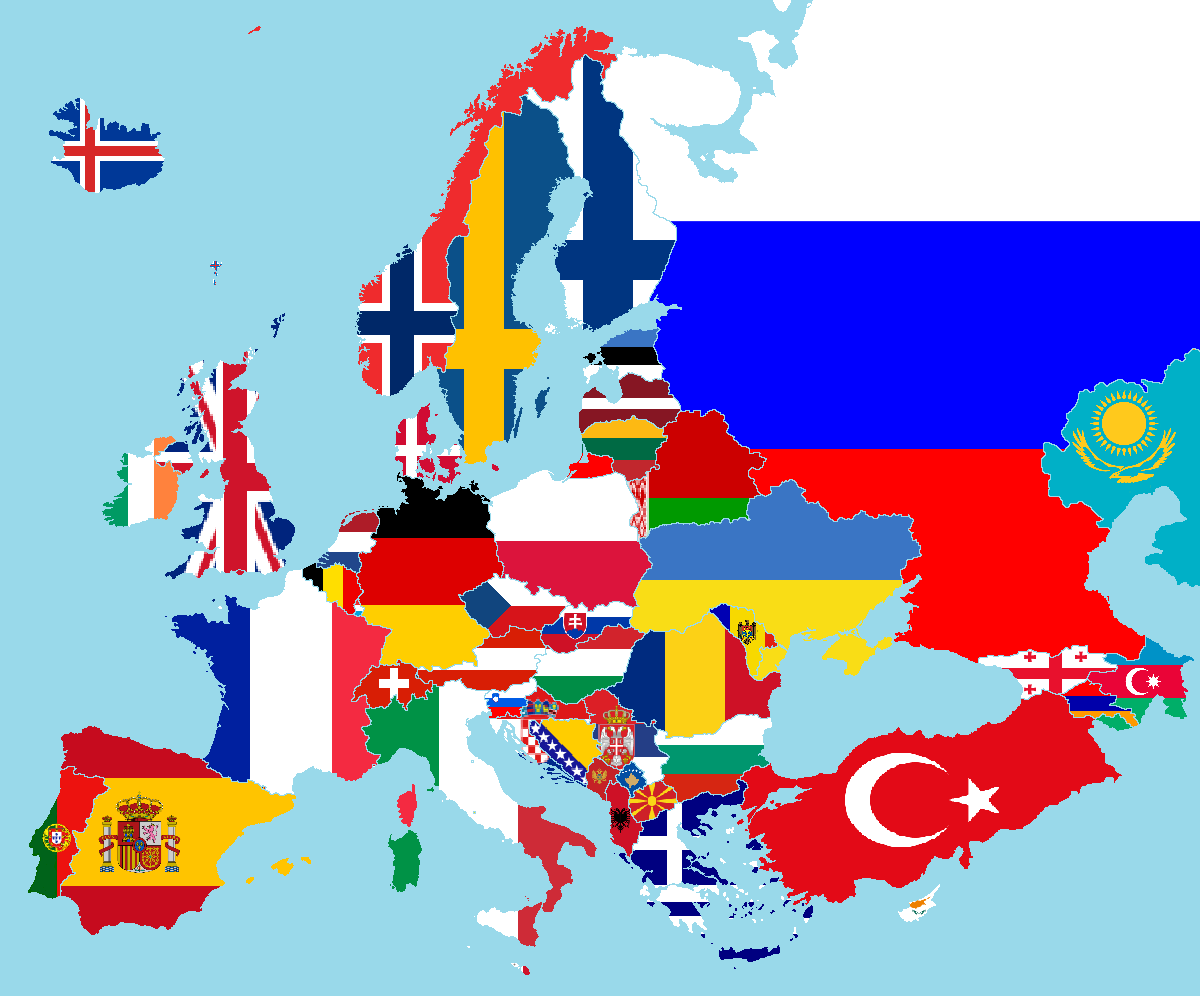
I recently returned from Edinburgh, a city that, besides being rainy and picturesque, hosted a conference on Virtual Research Environments, a topic obscure to most people and, above all, impossible to explain to my grandmother when she asks: “What do you talk about at these meetings?” Now, when I say “grandmother”, do not make the mistake of imagining a meek, dazed ninety-five-year-old. She is simply the spearhead of a generation that has lived through, and grown stronger through, war, 1968, the economic boom, Canale 5, Mike Bongiorno, soap operas, and Young Signorino. She is sharp, always ready with an answer, impossible to deceive, skilled at outmaneuvering others, and hard to bend to anyone’s will. Basically, a bulldozer. These are the people they should make films about. Robocop and Marvel superheroes look like timid newlyweds by comparison. ...

July 21, 2018 Â· Daniele Bailo

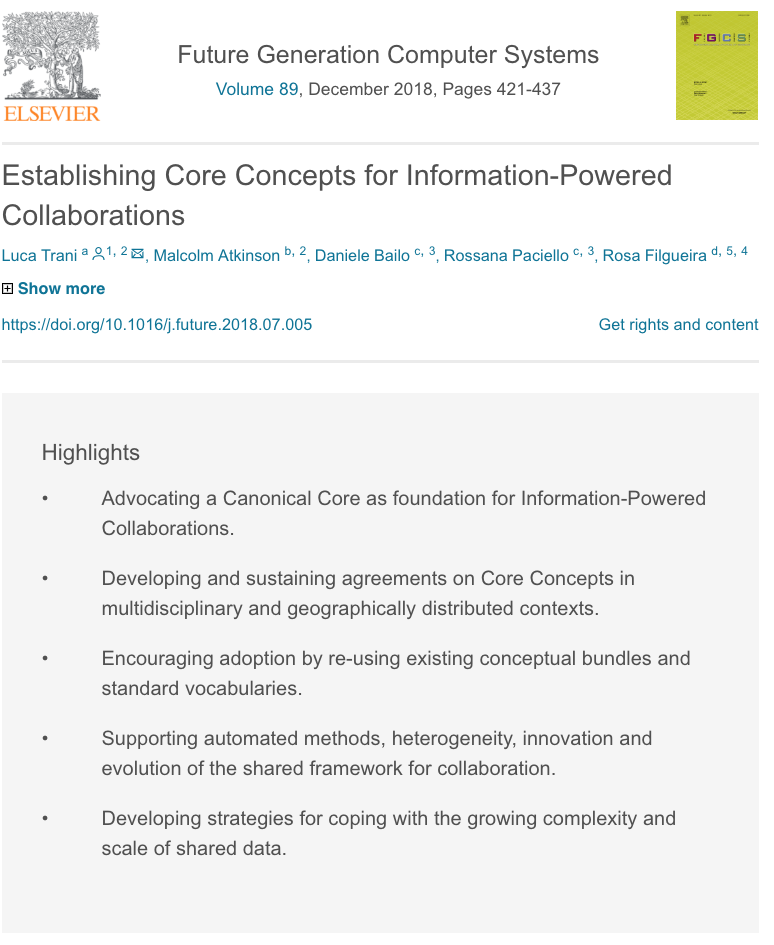
New Paper: Establishing Core Concepts for Information-Powered Collaborations

I am particularly proud to share this work, coordinated by Luca Trani. I hope it will pave the way for future developments and formal recognition of the EPOS-DCAT-AP extension. ...

July 16, 2018 Â· Daniele Bailo

Virtual Research Environment, Science Gateways, Virtual Laboratories. What's the difference?

An active debate is underway, mainly among some of the major players in the field of Virtual Research Environments, including VRE4EIC and other European project teams. The discussion focuses on defining the commonalities and differences among Virtual Research Environments (VREs), Science Gateways (SGs) as used in North America, and Virtual Laboratories (VLs) as used in Australia_._ There is broad agreement on the definition of a VRE: it usually provides not only access to ICT services, data, software components, and equipment, but also a collaborative working environment for cooperation; it supports the research lifecycle from idea to publication, as well as research management and administration. ...

June 29, 2017 Â· Daniele Bailo

Italia - España connection

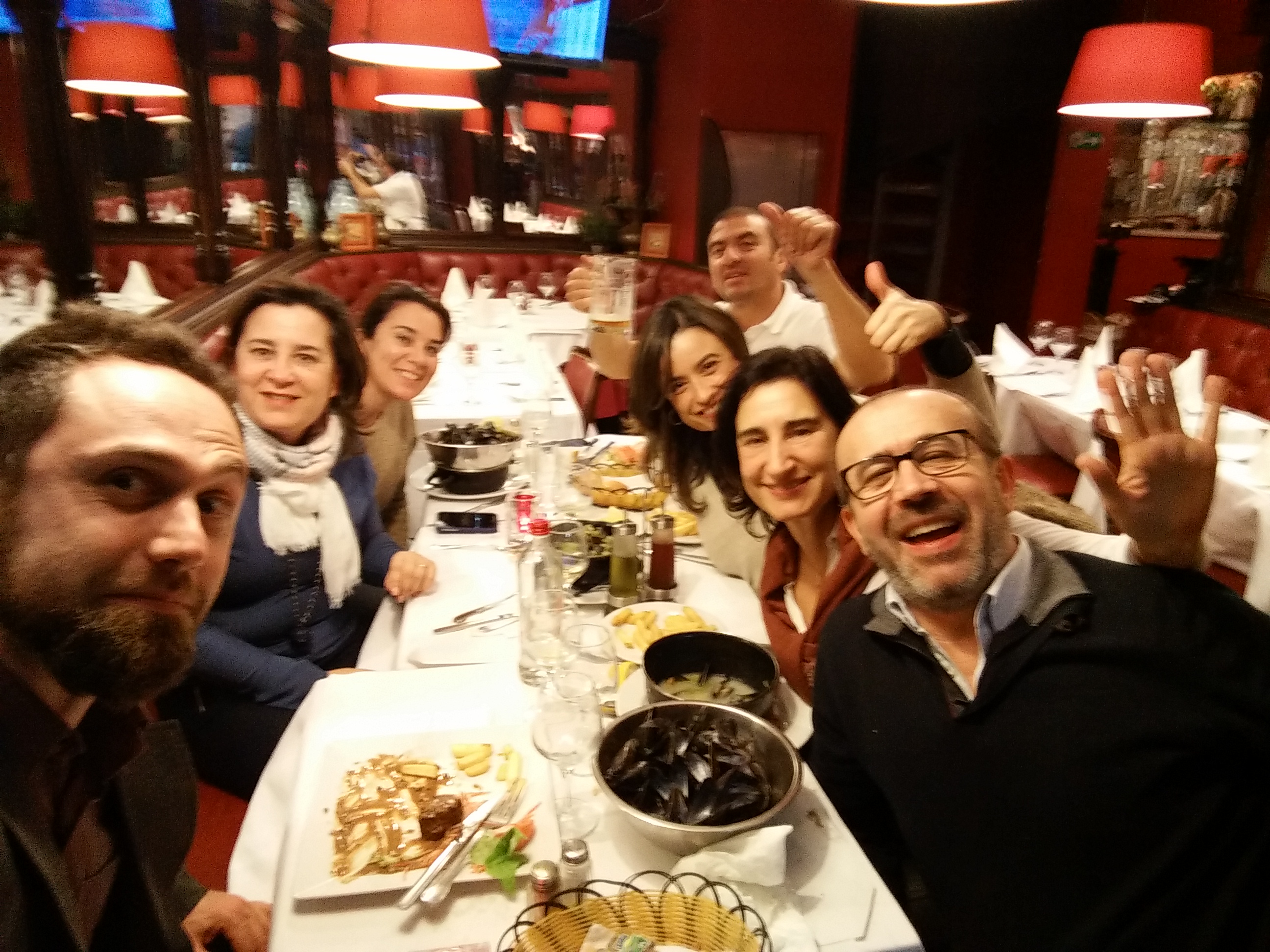
This post is simply an homage to my new Spanish friends. The story is straightforward. As often happens, I found myself in Brussels for work. This time it was only for one day, so I arrived the evening before the meeting and wandered around the city on my own. I went for a beer at the wonderful Delirium Café, where I met three Spanish people. It was very easy to start talking with them. We Italians and Spaniards do not usually have much trouble connecting with other people and starting a conversation. On the contrary, the problem is often making us stop talking, but that is another story. ...

February 8, 2016 Â· Daniele Bailo

Science and Social Media - Part IV (the end)

After looking in a previous post at some of the technological reasons behind the success of social networks, let us now consider what the new wealth of this social era is, and what opportunities and risks it creates for science. 4 The new wealth: data and the stream In the scenario described so far, the new wealth consists partly of data and their ownership, and partly of the possibility of sharing them and keeping this continuous flow, the so-called stream, constantly updated. Data ownership can be fairly easily connected to economic wealth: statistical and IT tools for exploring data (data mining) make it possible to extract valuable information that can be used strategically in economic contexts. This action is also promoted at intercontinental level, in the United States and Europe, through initiatives that spread open data policies, meaning policies that encourage opening data to everyone. See the two Italian examples at national and regional level. The data flow, or stream, is equally valuable because it attracts a large number of users: this is what happens on Facebook when users check their wall for friends’ updates. This guarantees a constant user presence, to whom advertising messages can be delivered and who can also be directed toward content of interest, such as advertising or online shopping sites. In this context, we will focus on the aspects most closely related to science. ...

December 19, 2015 Â· Daniele Bailo

Science and Social Media - Part III

After seeing in a previous post what social networks are and some of the social reasons behind their success, let us now look at some of the technological reasons for their enormous spread. 3 Technological reasons behind the success of social networks The needs described above could find at least partial satisfaction also, and above all, thanks to a technological evolution unprecedented in human history, which made the spread of SNs possible through: ...

December 17, 2015 Â· Daniele Bailo

Science and Social Media - Part II

After introducing the topic in a previous post, let us move to the core of the issue: what social networks are and the social reasons behind their success. What is a social network? A social network (SN from now on), or social network platform, is an IT platform generally accessible through the World Wide Web (www) that allows users and groups of users to interact by sharing information and data. These networks are usually thematic, for example dedicated to music, science, friendship, and so on, although the most widespread ones today, such as Facebook, tend to integrate different users and interests. ...

December 15, 2015 Â· Daniele Bailo

Science and Social Media - Part I

Just over ten years have passed since a Harvard University student laid the foundations for what, today, is the network almost automatically associated with the expression “social network”: Facebook. M. Zuckerberg, the now former student and new millionaire, managed to become the spokesperson and interpreter of the social dimension of the web. In a relatively short time, especially when compared with the hundreds of thousands of years humanity needed to introduce technologies such as ironworking, this helped drive an enormous and widespread adoption of computers and, more specifically, of the web. ...

December 13, 2015 Â· Daniele Bailo

Communication and Dissemination for European Projects (#2)

In a previous post we introduced the importance of communication in the context of European-funded projects, and we defined three modules for establishing efficient communication: A) Internal Communication Tools B) Communication Activities C) Website After describing the tools for internal communication, we now address communication activities and the website. Why do we need Communication activities? They are the core of internal communication among project members and external communication with stakeholders. They define how the various actors in a project, including project members, scientists, external stakeholders, funding agencies, and citizens, communicate. They are usually described in the Communication Plan. ...

September 21, 2015 Â· Daniele Bailo

Communication and Dissemination for European Projects (#1)

Communication is often considered a structural pillar in several domains. The commercial domain, of course, makes extensive use of every kind of communication tool, from social networks to storytelling techniques and traditional advertising, to engage users and ultimately increase profit. However, the importance of communication has also been recognized in science, and in particular in science projects funded by the European Community. Documents like Communicating EU research and innovation: guidance for project participants demonstrate how serious this issue has been taken by the EU. In addition, almost all EU projects I’ve come across, include a Communication Working Package. This issue - or better this challenge - needs at least two ingredients to be properly tackled: a good Communication Plan the know how and technical tools which are, in the end, the substance of the communication itself. They include all the technical tools (e.g. teleconferencing tools) and best practices which must be used to carry on an effective communication based on the communication plan. In this post I’ll deal with the second aspect, reporting the experience we had in the context of the EPOS european project and providing some thoughts, guidelines and - most importantly - our experience about the creation of all the tools we needed to set up an efficient communication. We called it Communication & Management Toolkit. HEADER IMAGE by Sceptre (Own work) [Public domain], via Wikimedia Commons ...

September 10, 2015 Â· Daniele Bailo