INGV Is Hiring 3 IT Technicians for the EPOS Platform

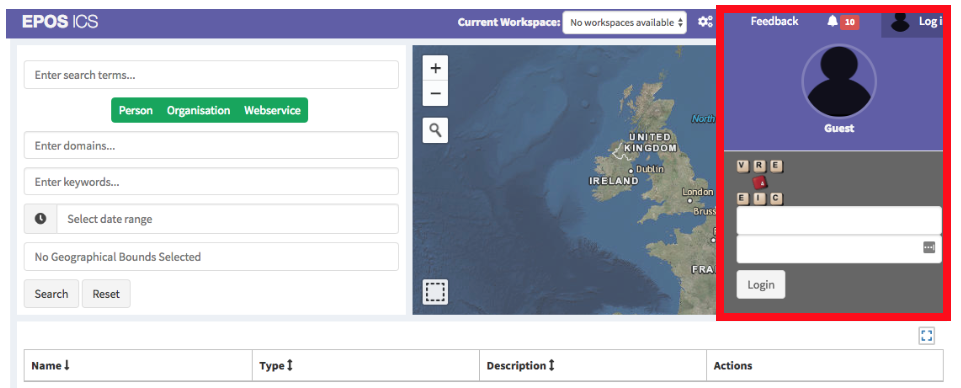
3 Open Positions Istituto Nazionale di Geofisica e Vulcanologia EPOS – European Plate Observing system We are looking for three IT technician profiles to contribute to the development of an innovative European research infrastructure aimed at integrating data from the solid Earth sciences (https://www.epos-eu.org/). Integration takes place through the EPOS Data Portal, a platform that allows users to search, download, and analyze data from scientific communities through a single map-based web interface using geolocated data. ...

March 30, 2022 Â· Daniele Bailo

Managing collaborative software developments in International Initiatives: how to optimize resources and time.

Facing reality There is a truth that we are all reluctant to admit: many EU funded initiatives in the research domain aim at producing software-related deliverables, but when coming to the real day-to-day work, releasing even small piece of working software is very challenging. Project partners have different approaches, different technical practices, different off-the-shelf software products that need to be harmonized or sometimes divergent ideas and different cultural backgrounds. That’s the beauty and the challenge of EU initiatives. COVID-19 made things even worse by hindering the possibility of having face to face meetings, where - everybody knows but just a few people say it – agreements and decisions are taken in “social” contexts (yes, I mean coffee breaks and working dinners). ...

December 21, 2021 Â· Daniele Bailo

EPOS Data Portal: a FAIR Platform for Access to Multidisciplinary Data and Services in Solid Earth Sciences

There are moments when, sometimes almost unexpectedly, you find yourself taking stock of all the work done in previous years. That kind of meticulous work, made of small daily refinements and microscopic steps forward that you may not even notice. In fact, sometimes it feels as if you are standing still. Then opportunities arrive when… BOOM… everything is illuminated by a new light and the puzzle comes together. What emerges is a beautiful mosaic, with thousands of tiny tiles placed with patience and consistency. ...

October 7, 2021 Â· Daniele Bailo

The three components to ENVRI-hub success

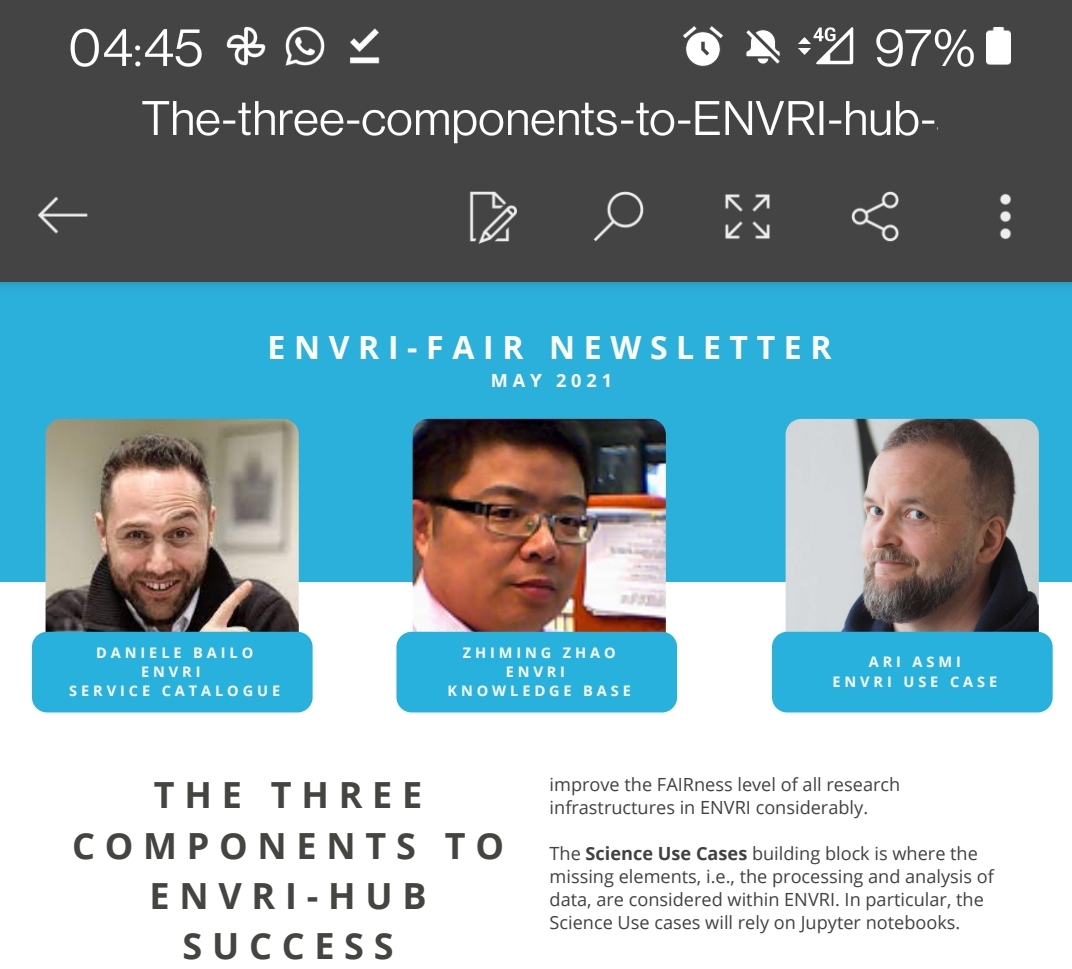
Interview with Daniele Bailo, Zhiming Zhao, and Ari Asmi, who explain the key components forming the ENVRI-hub: the ENVRI Catalogue of Services, the ENVRI Knowledge Base, and the ENVRI Use Cases. Daniele, can you explain in more detail why these three components are crucial to the ENVRI-hub? Daniele: These are three distinct but complementary elements used as containers to support the provision of heterogeneous datasets, services, and software within ENVRI. ...

June 1, 2021 Â· Daniele Bailo

F.A.I.R. Principles and Data: What Are They, and Why Do We Need Them?

For the last few years, let us say about three, people in my field have often talked about the F.A.I.R. principles: loved by European officials, regarded with suspicion by computer engineers, partly approved by scientists. These principles have a significant impact on research areas that in some way deal with data and data sharing. Question: which area of research has nothing to do with data and their distribution? Answer: almost none. Logical inference: the FAIR principles, whether we say “great!” or “alas”, concern almost all researchers. ...

November 4, 2020 Â· Daniele Bailo

INGV Is Hiring 3 IT Technicians for EPOS

3 Open Positions Istituto Nazionale di Geofisica e Vulcanologia EPOS – European Plate Observing system We are looking for three IT technician profiles to contribute to the development of an innovative European research infrastructure aimed at integrating data and services in the domain of solid Earth sciences. Integration takes place through an advanced system, the Integrated Core Services (ICS), which allows users to search, download, and analyze data from scientific communities through a single map-based web platform and interface using geolocated data. The call is funded by the EPOS-MIUR project. The contract duration is one year, with the possibility of renewal. The position will be classified under the professional profile of Collaboratore Tecnico Enti di Ricerca (level VI). The public call was published in the Italian Official Gazette no. 79 of 04.10.2019. The full text is available at: http://istituto.ingv.it/it/amministrazionetrasparente/disposizioni-generali/atti-generali/atti-amministrativi-generali/decreti-e-delibere/anno-2019-1/decreti-del-direttore-degli-affari-amministrativi-e-del-personale-2/13061-n-475-concorso-pubblico-per-n-3-posti-di-cter-vi-livello-a-tempo-determinato-codice-bando-3cter-rm1-09-2019/file.html And here: http://istituto.ingv.it/it/amministrazionetrasparente/bandi-di-concorso/concorsi-pubblici/tempo-determinato-2019.html ...

October 6, 2019 Â· Daniele Bailo

EPOS Integrated Core Services Architecture Basics - TUTORIAL

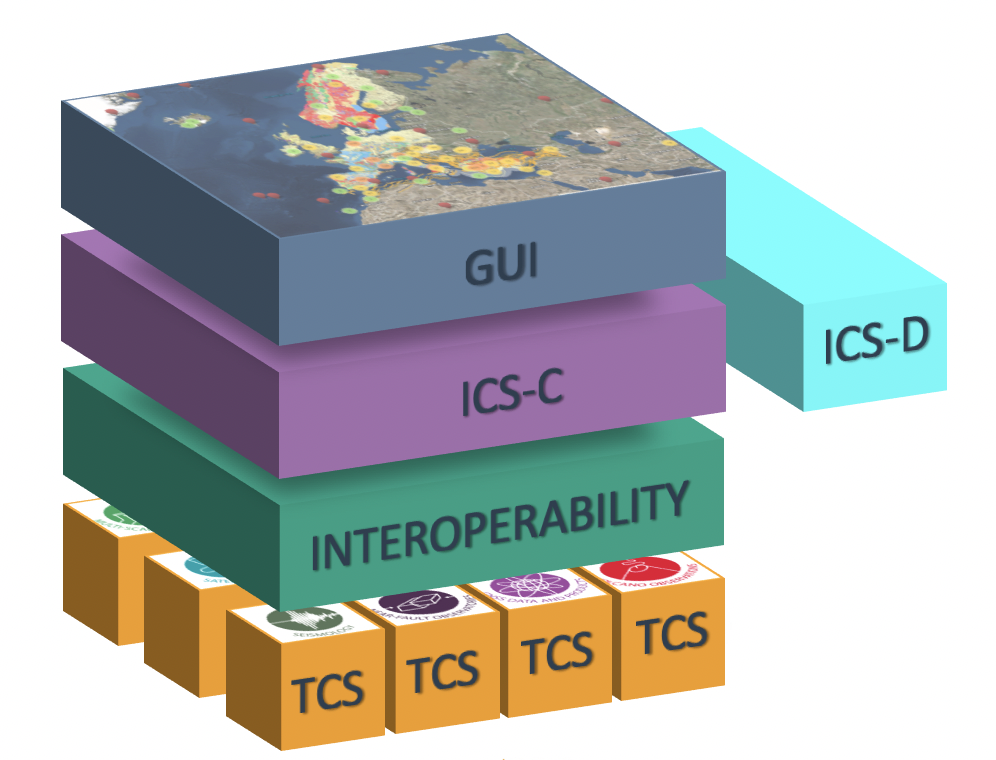
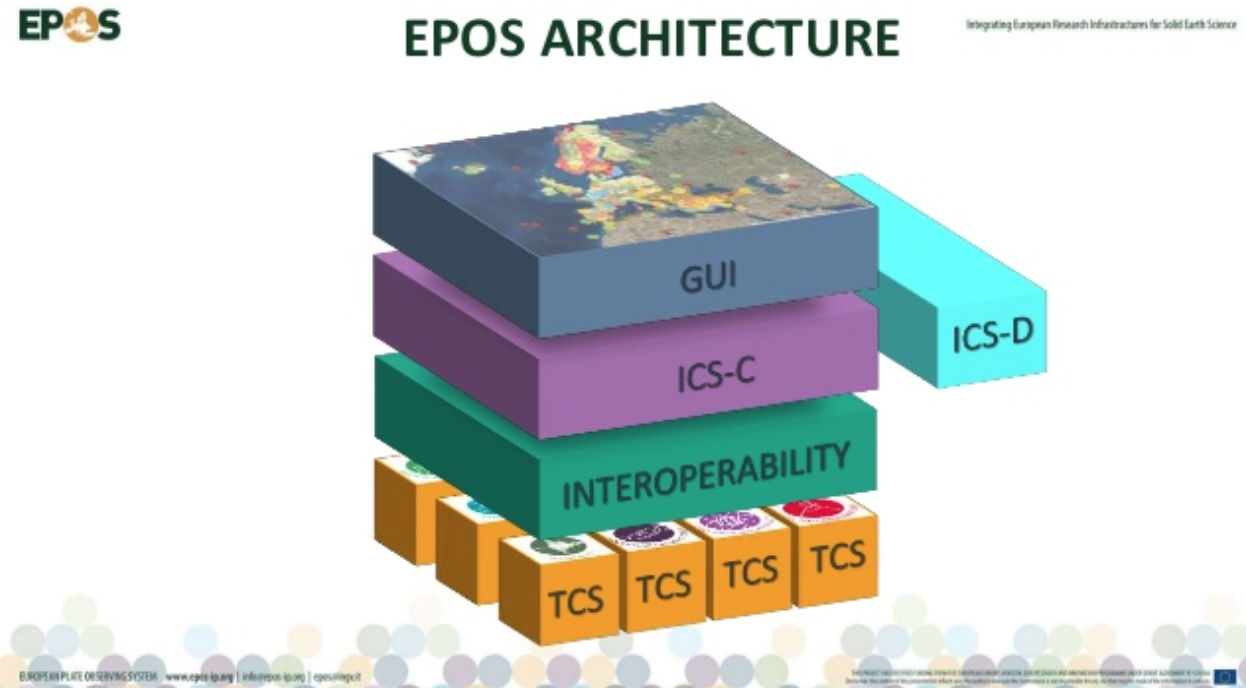
 Bailo, Daniele; Paciello, Rossana The presentation outlines the basics of the EPOS Integrated Core Services Central Hub, a system designed to integrate data, data products, software, and services provided by European data providers in the field of solid Earth sciences. It presents the main architecture and discusses the underlying technological choices. [slideshare id=154898130&doc=2019-190711094106&w=400&h=300]

July 11, 2019 Â· Daniele Bailo

Theses and Internships in a European Context - Computer Science and IT

Are you about to graduate, or close to starting an internship, and would you like to gain experience in a dynamic international environment? Take a look at the internship and thesis proposal from the European Plate Observing System (EPOS). EPOS - European Plate Observing system Istituto Nazionale di Geofisica e Vulcanologia EPOS (www.epos-eu.org) is an innovative European research infrastructure whose purpose is to integrate data and services in the domain of solid Earth sciences. These include data and services related to earthquakes, volcanic eruptions, geodetic deformation, satellite observations, and more. They are highly heterogeneous in terms of data-provision technologies, formats, and ways of presenting resources. Integration is performed through an advanced system, the Integrated Core Services (ICS), which allows users to search, download, and analyze data from specific communities through a single web platform and interface. This collaboration proposal is addressed to interns and thesis students interested in using innovative technologies. It aims to contribute to the further development and optimization of the Integrated Core Services system, and covers the following topics: relational databases (PostgreSQL) and non-relational databases, for example MongoDB; systems based on the microservices paradigm; optimization and tuning of the system and services; creation of Java and Python modules for mapping and converting data and metadata; creation and optimization of graphical interfaces with AngularJS; semantic integration, development, and optimization of DCAT-AP extensions. The activities to be carried out will be agreed with the student based on their topics of interest. ...

June 10, 2019 Â· Daniele Bailo

Enhancing Research Infrastructures with VRE4EIC components: the EPOS success story

(This article was originally written for VRE4EIC Newsletter. Follow this link to the original source). The European Plate Observing System (EPOS) highlights how its research infrastructure has become more efficient and user friendly by utilizing technology developed in the frame of the EU H2020 VRE4EIC project. In the last decades quite an amount of tools, technologies and software has been developed to support and improve research throughout the entire data lifecycle[1]. This includes software, modeling tools, and even code that can be used and re-used by researchers around the world. However, more and more emphasis has been given to the structural components that enable a Research Infrastructure[2] to be sustainable, robust and, even most importantly, compliant to the FAIR principles[3]. Such principles prescribe–in order to enable reproducible science–that data need to be findable, accessible, interoperable and reusable. It is usually up to research infrastructure designers, developers and managers to find the best architecture and technologies to enable FAIR to become reality in their scientific domain. However, looking transversally at science domains, it is clear that there is a number of challenges common to several communities, as evidenced by the common requirements elicitation and analysis of existing technical assets carried out both in the VRE4EIC and ENVRIplus project[4]. In this framework, VRE4EIC is promoting the adoption of common, standard technical solutions in order to facilitate Research Infrastructures in facing shared challenges and thus complying with FAIR principles. This is the case of the European Plate Observing System (EPOS), a Distributed Research Infrastructure long-term plan to facilitate integrated use of data, data products, and facilities from distributed research infrastructures for solid Earth science in Europe. ...
October 30, 2018 Â· Daniele Bailo

How Research Infrastructures can take advantage of interoperable VRE building blocks

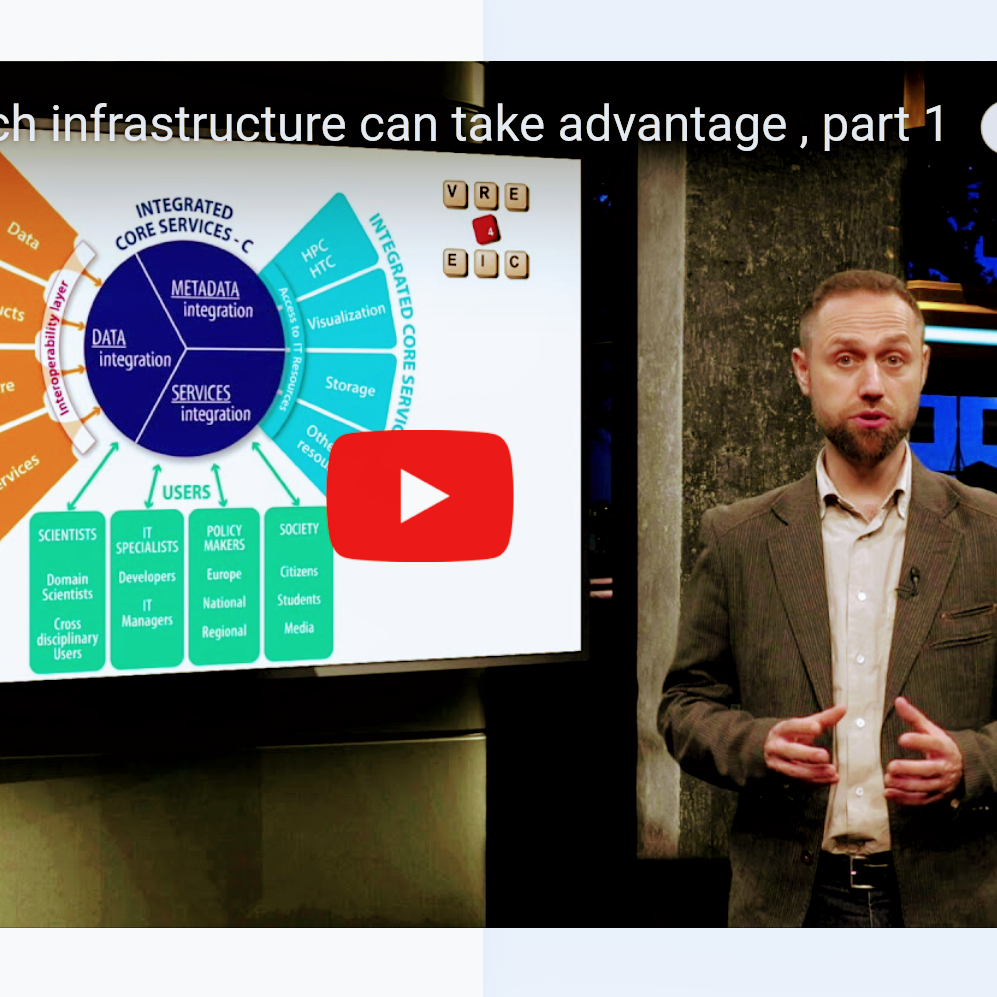
It feels a little strange: I am both proud of and slightly shy about the video we released in the framework of the VRE4EIC project. It was funny: I had just landed at Schiphol airport and rushed to TU Delft University. I suddenly found myself at the New Media Center, in front of a camera, inside a soundproof studio with a bright green background, with a few people watching, or perhaps staring, from behind the soundproof glass. Then I had to start speaking with my southern European English accent. That was the embarrassing part. ...

August 9, 2018 Â· Daniele Bailo