SoftwareX paper page for mcp-fdsnws-event

A new bridge between AI agents and seismological data: mcp-fdsnws-event

Our new paper has just been published in SoftwareX: “mcp-fdsnws-event: An MCP gateway for FDSNWS-Event web services”, by Valentino Lauciani and Daniele Bailo. The paper presents mcp-fdsnws-event, an open-source software component that creates a bridge between standard services used by the seismological community and the emerging ecosystem of applications based on Large Language Models and AI agents. The starting point is simple. For many years, the seismological community has used the FDSN Web Services standard to query earthquake catalogues and retrieve information about seismic events. These services are robust, interoperable and widely adopted, but using them normally requires knowledge of APIs, query parameters and formats such as QuakeML. ...

September 10, 2026 Â· Daniele Bailo
Digital illustration about artificial intelligence and the mind

Are Artificial Intelligences Really Intelligent?

What generative artificial intelligence can teach us about machines, intelligence and, perhaps, ourselves. Artificial intelligence writes texts, generates images, produces software, solves problems and sustains increasingly convincing conversations. But does all this mean that machines are truly intelligent? This is the question at the heart of my article “Dentro la mente dell’intelligenza artificiale” (Inside the Mind of Artificial Intelligence), published in the July-August 2026 issue of Sapere. It is an apparently simple question, but one that contains many others. ...

August 27, 2026 Â· Daniele Bailo
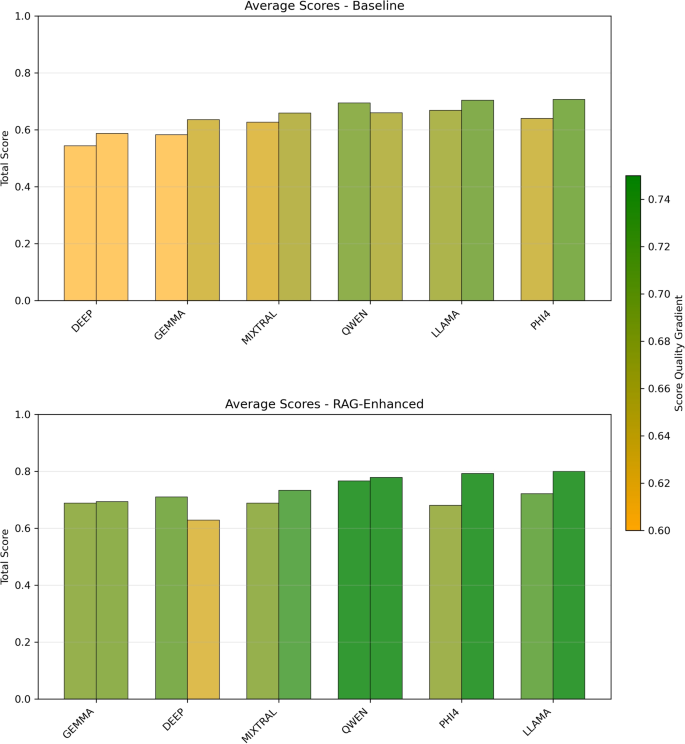
Comparison of average model scores for the baseline and RAG-enhanced configurations

Can Europe Build Truly Sovereign AI?

Whoever governs knowledge also governs Artificial Intelligence. Artificial Intelligence is rapidly becoming one of the strategic technologies that will shape science, industry, and public institutions over the coming decades. Discussions often focus on which language model performs best or which company will release the next breakthrough. Yet a more fundamental question is emerging: Who governs the knowledge on which AI systems rely? Our new paper, published in Earth Science Informatics, argues that trustworthy scientific AI cannot depend solely on increasingly capable language models. It also requires a new way of governing scientific knowledge. ...

August 6, 2026 Â· Daniele Bailo

Introduction to Artificial Intelligence: Applications, Foundations, and Ethical Challenges

I am pleased to share an introduction to the world of Artificial Intelligence (AI), exploring its applications in everyday life as well as in scientific and technological contexts. The seminar examines the fundamental principles that guide AI development, with a focus on advanced technologies such as Machine Learning and Deep Learning, and discusses the differences between generative and traditional AI. It also offers space for reflection on the ethical and environmental aspects of AI use, in line with the European regulatory framework and the challenges ahead. ...

May 8, 2025 Â· Daniele Bailo

Nuova sezione News

Ho aperto questa sezione per raccogliere aggiornamenti rapidi su ciò che sto facendo come tecnologo INGV e IT Officer di EPOS-ERIC: note operative sui progetti europei e nazionali collegamenti a talk o pubblicazioni in uscita brevi diari tecnici su strumenti, dataset e integrazioni In questo modo posso mantenere il sito leggero e aggiornato senza passare da WordPress.

December 12, 2024 Â· Daniele Bailo

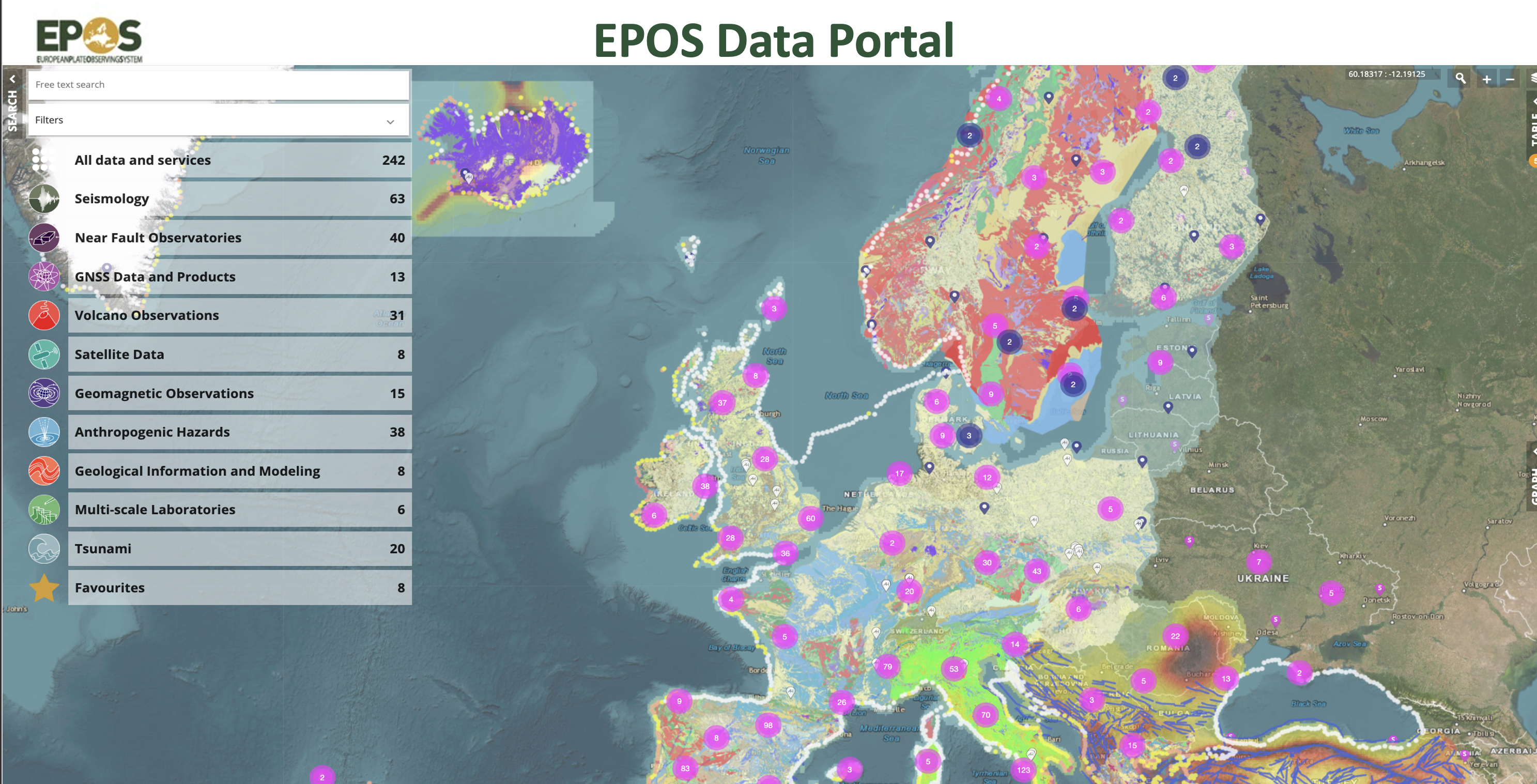
Innovation in Earth Science: the EPOS Data Portal

In November 2023, Nature Scientific Data published a scientific article presenting the data integration and computer science work that I carried out over the last 10 years together with a team of truly excellent colleagues. The article presents an initiative that is changing the way we approach Earth-science research in Europe: the EPOS Data Portal. In this post, I will explain in accessible terms what makes this multidisciplinary platform so special. The European Plate Observing System (EPOS) is not just an international initiative; it is a vision that is redefining Earth science in Europe. This pioneering research infrastructure has built a unique collaborative environment where the sharing and use of scientific data are encouraged, supported, and carefully managed. Open Data, in its purest spirit, allows everyone, scientists, policy makers, experts, and citizens, to access information freely. By adhering to the FAIR principles (Findable, Accessible, Interoperable, Reusable), EPOS is becoming a European reference point and a symbol of open and interoperable access to data. This approach not only opens new doors to knowledge, but is also a fundamental step toward more inclusive, collaborative, and innovative scientific research. ...

November 23, 2023 Â· Daniele Bailo

Unlocking True Interoperability in Solid Earth Science: A Deep Dive into Metadata, Semantics, and Web Services

 I am pleased to share my latest paper, “Integrated access to multidisciplinary data through semantically interoperable services in a metadata-driven platform for Solid Earth Science.” The paper examines an innovative approach that combines metadata, semantics, and web services to achieve seamless data interoperability. A key discovery highlighted in the paper is the pivotal role of semantics at the data discovery level. The queries received by the main data integration system are mapped to specific queries using the semantic information associated with the data source. This ensures that data from various sources can be visualized in a unified format, enhancing the user experience. Link to the paper for detailed insights ...

September 12, 2023 Â· Daniele Bailo

The Agile Shape-up method for collaborative developments in international contexts:a lean approach for EPOS

This presentation, originally prepared in early 2020, describes an innovative Agile approach for enabling collaborative software development in international, distributed teams. It is particularly suited to EU projects and other international working groups. Please download the presentation, as it includes animations.

October 11, 2022 Â· Daniele Bailo

European Open Science Cloud (EOSC): Key Challenges and Opportunities for the Future of EU Research

The EU is ideally positioned to take a global leadership role in the development of a cloud environment for science. The European Open Science Cloud (EOSC) will be the virtual environment where multidisciplinary data, access infrastructures, and computing resources are made available to researchers and private-sector actors. Europe has long promoted the sharing of scientific research data, which should be remembered as an investment on which national governments and the European Community are spending substantial resources, in the order of billions of euros. ...

June 14, 2022 Â· Daniele Bailo

What is EPOS? 4 Publications to get a grasp on what EPOS ERIC is and does

I have been often asked by people outside of my domain what is my job. As many jobs in the IT domain, it is a little bit difficult to explain what we do: it is quite technical and abstract. It has to do with structures that do not exist in reality. It has to do with planning, with considering sustainability of the envisaged activities. We work with bits, code, data structures, metadata, with management of huge IT objects and initiatives. ...

May 10, 2022 Â· Daniele Bailo